Wednesday, May 30, 2007

Vanishing Ice

There is a wonderful interactive article on the National Geographic website for June. Explore global warming and the predicted effects on many of the mammals that live in Arctic.

View the photograph gallery.

The photographs here represent a decade's work. They embody my love of ice, and of the blue-white world it nourishes. The photos also carry a message, one that I understood with sudden clarity that May day as I watched amphipods flit along the ice and heard the clicks and squeaks of approaching whales: If global temperatures continue rising, the ice will likely disappear. An Arctic without ice would be like a garden without soil. [Text and photographs by Paul Nicklen]

Explore the Warming Arctic

Climate Connections from NPR and National Geographic.

What you can do to help.


Saturday, May 26, 2007

EnergyNet Special Update: State Renewable Electricity Standards

From Union of Concerned Scientists:

Recently, there's been a flurry of state-level action to advance clean, renewable energy resources such as wind, bioenergy, and solar. Below, we provide an update on the latest activity and introduce several new and updated Union of Concerned Scientists resources for renewable energy advocates, policy makers, researchers, and concerned citizens, including the
Renewable Electricity Standards Toolkit—a user-friendly resource for learning about and tracking state standards.

State-level Action on Renewable Energy

Already this year, Minnesota, New Mexico, and most recently, Colorado have significantly boosted their renewable electricity standards—requiring electric providers to gradually increase the amount of energy they supply from renewable sources. Both Colorado and New Mexico increased their standards for investor-owned utilities to 20 percent by 2020, and set a 10 percent by 2020 standard for other utilities. In Minnesota, the legislature adopted a 30 percent by 2020 standard for Xcel Energy (the state's largest utility) and a 25 percent by 2025 standard for all other utilities. These expansions reflect a growing trend in state level renewable electricity standards as 10 states have now increased or accelerated their requirements since 2005.

UCS projects that the 21 states and the District of Columbia that have already adopted renewable electricity standards are on track to reduce their global warming pollution by 108 million metric tons (MMT) of carbon dioxide (CO2) by 2020—an amount equivalent to taking 17.7 million cars off the road. The recent clean energy victories in Colorado, Minnesota, and New Mexico, which together account for 20 MMT of CO2 reductions by 2020, helped put the states over the 100 MMT milestone.

By 2020, UCS also projects the state standards will produce more than 46,000 megawatts of clean, renewable power, enough to meet the needs of 28.5 million typical homes. State renewable electricity standards are expanding, with at least 10 more states—including California, Illinois, and Michigan—considering adopting a requirement or raising an existing one. The success of state renewable electricity standards is helping build momentum for a federal standard of 20 percent by 2020. The federal standard would increase renewable energy output nearly four times over current state standards. Urge your senators to support a national renewable energy standard.

New and Updated Resources Available from UCS

Renewable Electricity Standard Toolkit

To help track state standards, UCS has developed a new, one-stop resource, the Renewable Electricity Standards Toolkit. The toolkit includes summaries of all 22 standards as well as maps illustrating existing standards and projections for future renewable energy development. In addition, it features a database with detailed information about state standards ranging from how renewable energy technologies are defined to how standards are enforced. The toolkit also makes it easy to evaluate how the standards compare with each other overall and on key elements, and to access legislation and regulatory documents.

UCS Fact Sheet: U.S. Department of Energy Study Shows State Renewable Electricity Standards Are Affordable

This new UCS fact sheet summarizes a recent analysis from the Department of Energy's Lawrence Berkeley National Laboratory that compares the results from 28 state or utility-level renewable electricity standard cost studies. The report finds that 70 percent of the studies reviewed project retail electricity rate increases of no greater than one percent. Six of the studies result in cost savings for electricity consumers.

UCS Fact Sheet: Renewable Electricity Standards at Work in the States

The newly updated fact sheet provides summary information on state-level renewable electricity standard activity, including which states have a standard, projections of new development, and how several of the states are doing in achieving their requirements so far.

UCS Fact Sheet: Successful Climate Solutions - Renewable Electricity Standards

The newly updated fact sheet provides information on how states are demonstrating the potential of the renewable electricity standard as a successful strategy for reducing CO2 emissions. Details on how a national renewable electricity standard could significantly increase climate benefits is also provided.

Representative Confronts American Empire on House Floor

By Jim McDermott on AlterNet.
Posted on May 26, 2007

Rep. Jim McDermott rescues some history from the Memoryhole and puts Iraq into context: It's always been all about the oil.

Editor's note: After a week that saw Democrats cave to the White House in the worst possible way on Iraq, we thought this speech, offered on the House floor by Rep. Jim McDermott, D-Wa., last Wednesday, was worth highlighting. In a brief, five-minute commentary, McDermott does something almost unheard of in Washington: He looks at an issue in its larger historical context instead of pretending it just sprung up overnight like mushrooms after a rainfall.


Mr. Speaker:

This president and vice president have vowed to repeat the mistakes of history, and they have put into motion a plan to do just that in Iran, even as the House is about to send the president a box of blank checks for Iraq, against the will of the American people.

The history is worth knowing.

In 1953, the United States and United Kingdom launched Operation Ajax, a covert CIA operation to destabilize and remove the democratically elected government of Iran, including then Prime Minister Mohammed Mossadegh.

Why? Oil.

Under Mossadegh, the Iranian government decided to reclaim Iran's rightful ownership of its national oil treasure, which had been exclusively controlled by the British who were taking 85 percent of the profits.

Oh, and by the way, the U.K. also kept the books secret, merely telling Iran what its 15 percent take was.

As soon as Mossadegh began to reclaim Iran's oil treasure, it was all over. Operation Ajax was set into motion.

The U.S. embassy in Tehran provoked phony internal Iranian dissent, while the Brits engineered an Iranian financial crisis by orchestrating a global boycott of Iranian oil. We brought down the Iranian government and installed the Shah.

For two decades, we propped up the Shah against the will of the Iranian people. It was all about controlling Iran. It still is. Today, ABC News is reporting exclusively that this president has authorized a new covert CIA plot to bring down the Iranian government.

I ask unanimous consent to enter into the record the journalism produced by chief investigative reporter Brian Ross and Richard Esposito of ABC News.

This is their lead sentence in the story.

"The CIA has received secret presidential approval to mount a covert 'black' operation to destabilize the Iranian government, current and former officials in the intelligence community tell the Blotter on ABCNews.com."

We’re back in 1953, and that worked out so well.

Of course, the vice president wanted to invade Iran, so we can be sure he will spin new tales of fear in coming days to keep his preferred option, invasion, very much alive.

The president knows only one way -- my way or the highway.

His vice president knows only one way -- invade and seize control of what you want -- and he wants the oil treasure of Iraq and Iran to become wholly owned subsidiaries of the western oil companies he so favors.

With Iraq in civil war, the president has authorized a secret plan to repeat the doomed mistakes of history in Iran.

How many billions of reconstruction money for Iraq will be siphoned off for the deconstruction of Iran?

The American people are virtually shouting at us to pay attention and get our soldiers out of Iraq, now.

Vast sums of U.S. taxpayer money are flowing into Iraq and billions of U.S. dollars are missing.

The special inspector for Iraq reconstruction told a San Antonio newspaper last week that corruption in Iraq is endemic and debilitating.

But, Prime Minister al-Maliki has granted ministers and former ministers immunity from prosecution by Iraq’s Commission on Public Integrity.

And, in turn, the ministers can shield their own employees from prosecution.

And, a government that has been told by this president and vice president to pass an oil law that transfers control -- and profits -- to Western oil companies, just like the good old days in Iran.

Overthrowing Iran in 1953 was all about oil. Invading Iraq was all about oil. And the new secret plot against Iran is all about oil.

Oil is the only benchmark this president and vice president want, and they will keep American soldiers fighting and dying until an oil law is passed in Iraq that gives Western oil companies control of the spigot.

It is time to unmask the latest doomed plot to overthrow Iran and past time to get out soldiers out of Iraq.

Nothing less than protecting our troops is acceptable.

Rep. Jim McDermott


God bless you, Rep. McDermott! Let us bring our young people home, alive. It is an atrocity that we are sacrificing yet ANOTHER generation to the god of oil.

Save The Internet

Phone and cable company lobbyists are back on the attack in Washington. You can help stop them again by taking five minutes to save the Internet. The Federal Communications Commission needs to hear your story about why an open Internet is important to your work, your family and our democracy.

Save the Internet: Tell Your Story to the FCC

Last year, more than 1.5 million Americans spoke out to stop the big phone and cable companies from killing Net Neutrality in Congress. Now industry lobbyists are pressuring the FCC to rule against the one principle that protects your freedom to choose online. That's why it is so important for you to speak out now.

FCC recently launched an official inquiry into Net Neutrality. They're already hearing plenty from AT&T, Verizon and Comcast--who want to be the gatekeepers deciding what you can do online. Now they need to hear from you.

At SavetheInternet.com, you can send your concerns directly to the FCC, read stories from others, watch new videos, and join a national conversation about the future of the Internet.

Stop Gasoline Price Gouging

Can you face another summer where a day trip to the lake or the beach costs you an arm and a leg? It is shaping up to be just that if we do not ask Congress to stand up to Big Oil now.

But there is a bill in the House this week that could make gas price gouging a federal crime, so we do not pay more while the oil companies rake in record profits. I signed a petition to urge my representative to pass this bill this week -- can you join me at the link below?

http://pol.moveon.org/stoppricegouging/

Tuesday, May 22, 2007

Gasoline at $4.00 per gallon

From Move-On.org:


As of yesterday, gas prices are the highest in U.S. history—we just passed the 1981 record, even adjusted for inflation.1 Prices could reach $4.00 per gallon in parts of the country, just in time to crimp summer vacation plans. As consumers suffer, the oil industry continues to reap the windfall—breaking profit records on an almost quarterly basis. It's outrageous!

Enough is enough. Hearings start today on H.R. 1252, a House bill that would make gas price gouging a federal crime, punishable by 10 years in prison. Speaker Pelosi has said she'll move the bill to a vote this week—if there's the two-thirds majority required to fast track the bill through the process.2

Oil company lobbyists are frantically trying to stop the bill. Your representative needs to hear from you today. Will you sign our petition asking Congress to pass the price-gouging bill—and then send it to your friends?

"Gasoline price gouging should be made a federal crime before the summer price increases hurt more American families."

Clicking here will add your name to the petition.

Rep Bart Stupak (D-MI), sponsor of the House bill said this of his motivation to introduce the legislation:

"In April ... crude oil was $7 a barrel cheaper than last year (but) gas prices were almost 50 cents a gallon higher. Clearly there's more at play than simply the world crude oil market."3

In April, more than two-thirds of Americans reported that their gas bills were causing financial crunches, with a full third saying it was having a "serious" impact on their families.4

That same month, the top two US companies, Exxon-Mobil and Chevron-Texaco, announced a combined $14 billion in first quarter profits.5

It seems like even the oil industry has gone too far this time, and it's time to balance the scales. The Senate passed a price-gouging measure out of committee last week, and the House bill now has over 100 co-sponsors from both sides of the aisle.

The oil industry is nervous. They've sent their lobbyists to the Hill in full force to stop—or at least weaken—these bills, and they're pulling out all the stops. The American Petroleum Institute, an industry front group of more than 400 oil and gas companies, even threatened that new laws could increase gas prices more.6

Enough is enough. This summer, we can stop Big Oil from profiting at the expense of American families.

Can you sign the petition to ask your representative to make gasoline a price gouging a federal crime now? Click here.

Sources:

1. "U.S. gas prices jump more than 11 cents," Atlanta Journal-Constitution, May 21, 2007
http://www.moveon.org/r?r=2595&id=10386-1528081-d6jBwg&t=5

2. "Debate on [H.R. 1252], offered by Energy and Commerce Oversight and Investigations Subcommittee Chairman Bart Stupak, D-Mich., will kick off Tuesday with a hearing in Stupak's subcommittee. It is possible that an Energy and Commerce markup will follow. But Democratic leaders might opt to bring the bill up to the floor under suspension of House rules by Wednesday."
Excerpted from National Journal's Congress Daily, Monday, May 21, 2007

3. "Lawmaker Links Gas Prices to Investments," Houston Chronicle, May 16, 2007 http://www.chron.com/disp/story.mpl/ap/fn/4810598.html

4. "As Gas Prices Rise Again, Democrats Blame Big Oil," Washington Post, May 11, 2007 http://www.moveon.org/r?r=2591&id=10386-1528081-d6jBwg&t=6

5. "Lawmaker Links Gas Prices to Investments," Houston Chronicle, May 16, 2007 http://www.chron.com/disp/story.mpl/ap/fn/4810598.html

6. "Lawmakers' blood pressure rises with prices at the pump," TheHill.com, May 17, 2007 http://www.moveon.org/r?r=2586&id=10386-1528081-d6jBwg&t=7

Monday, May 21, 2007

Divest for Darfur : Fidelity Investments

Fidelity Urges Media to Nix Ads That Link It to Darfur
Slammed for Investing in Sudanese Oil Partner

NEW YORK (AdAge.com, May 14, 2007) -- Fidelity Investments is exercising its marketing muscle these days -- just not the way the Save Darfur Coalition would like. The financial-services company has pressured CNN and Newsweek to hold off running coalition ads critical of Fidelity's investment in PetroChina, a company whose parent, China National Petroleum, is one of Sudan's largest oil-industry partners.

uuworld.org : uua pressures fidelity over sudanese investments
. . . Boston-based Fidelity has major investments in two Chinese oil companies, PetroChina and Sinopec. China, which is the world’s fastest growing oil consumer, depends heavily on Sudanese oil, with revenues supporting the Sudanese government. The Sudanese government, which also receives arms from China, is supporting militias attempting to crush a rebellion in the Darfur region by killing all non-Arab Darfurians. The slaughter, which has left more than 200,000 dead and 2.5 million homeless, has been declared a genocide by U.S. President George W. Bush.
For more information, please visit Divest for Darfur and send your sentiments to Fidelity. If you have investments, check your portfolio for Fidelity. Follow this story and divest for Darfur if you have to.

Saturday, May 19, 2007

Oppose Missile Defense and New Nuclear Weapons Funding

This week, the U.S. House of Representatives will vote on a defense authorization bill that includes the administration’s proposal to build a new generation of nuclear weapons—a proposal that is unnecessary, costly, provocative, and could lead to the resumption of nuclear testing.


Click above to take action if you believe we have enough weapons of mass destruction and do not need more.

The bill also includes more than $9.5 billion for flawed ballistic missile defense programs. Write today and urge your representative to oppose funding for unnecessary new nuclear weapons and to support amendments to reduce funding for missile defense programs.

Ten Birds That Help Control Garden Pests

As a gardener, it can be your worst nightmare: watching helplessly as hordes of destructive insects attack your plants. With a little planning and simple landscaping, however, you can help moderate garden pests naturally in your yard. Your weapon: bug-eating birds.

Give up the fungicides, pesticides and other poisons used in your garden.

Another River Bites the Dust?

Upper Delaware River shorebird

Take Action Button

The Upper Delaware River, number four on America’s Most Endangered Rivers of 2007, is now at the tipping point. Take action today to make sure the right decision is made for this river and the communities that depend on it.

The Upper Delaware is threatened by a massive power line. By preliminarily designating the Upper Delaware River Valley as a transmission corridor, the U.S. Department of Energy (DOE) just made it easier for New York Regional Interconnect, Inc. to build this power line. If built, the power line would scar this scenic gem -- one of America’s first Wild and Scenic Rivers -- that generates vital economic revenue through tourism and recreation.

Tell the DOE that Wild and Scenic Rivers like the Upper Delaware River should not be used as transmission corridors -- it is a use that is completely at odds with the rivers’ protected status and is not in the best interest of the people who depend upon these rivers for revenue, recreation and relaxation. Act now to save the Upper Delaware River.


Saturday, May 12, 2007

Aren't We Paying Enough for Gas and Oil?

The administration wants to sacrifice more than one million acres of outstanding wildlife habitat and archaeological sites in northwest Colorado to destructive oil and gas drilling and off-road vehicle use.

Please go to http://www.savebiogems.org/yellowstone/takeaction and tell the administration to protect our natural and cultural heritage by banning harmful drilling and off-road vehicle use in the Vermilion Basin and all other wilderness-quality lands in this region.

The Little Snake area provides habitat for elk, pronghorn, mule deer, coyotes and white-tailed prairie dogs. The waters of this region sustain the endangered Colorado River Pikeminnow and the Colorado River cutthroat trout. Greater sage grouse, golden eagles and peregrine falcons also take refuge there.

Yet the administration has proposed stripping existing wildlife protections from these lands and opening virtually the entire area to drilling and off-road vehicles. This scheme also fails to protect the region's irreplaceable historical and archeological treasures.

Thursday, May 10, 2007

No copper mining on BLM lands

The federal government recently decided to move forward on a decision which would allow for the development of a 3,000 acre copper mine in a popular recreation spot within the blast zone of Mount St. Helens. This area, on the northern edge of the Mount St. Helens National Monument, within the Gifford Pinchot National Forest, is seismically active. If plans for the mine were to go forward, it could threaten the quality of community drinking water, harm important stream habitat for threatened populations of salmon and steelhead, and destroy areas cherished by local hikers, campers and horseback riders. Moreover, a mine would likely impact ancient forests, the Tumwater Inventoried Roadless Area, and surrounding popular recreation areas.

Please help us oppose this action. Click here.

Do Not Forget Mother's Day


Dolphin e-cardElephant e-cardGiraff e-card

Owl e-card Polar bear e-cardLion e-card

Seal e-cardBaby wolf e-cardWoodpecker e-card

Sunday, May 06, 2007

Shop, Buy and Eat Locally

Did you know that the production and transportation of the food consumed by the typical American generates nearly as much carbon dioxide as the average car? The standard kilogram of food consumed today in the United States travels 1,500 miles from farm to plate.

Peter Hoffman, national chair of the Chefs Collaborative, a nationwide network of food producers with a mission to advance a more sustainable food supply:
If you want to reduce your environmental impact, in particular your carbon dioxide emissions, then the less fossil fuels that are used to get food to you, the better. You can start simply by going to a farmer’s market, buying something locally produced and incorporating it into your regular shopping.
Think about it. Patronize your local farmer's market. Or grow your own!

Saturday, May 05, 2007

Blogging Chicks Carnival on Sunday

Carnival of Blogging ChicksGirls Can't What? blog is hosting The Carnival of Blogging Chicks on Sunday, May 6, 2007. Join us for our thoughts on Mother's Day. My entry for the carnival is here.

If you would like to join the Blogging Chicks, you must be female. Click here and follow the directions. Blogging Chicks is now a Feedburner Advertising Network. When you email Michele to join, ask for an invitation to join the FAN.


Australia and New Zealand Warned by United Nations

Australia has warned that it will have to switch off the water supply to the continent's food bowl unless heavy rains break an epic drought - heralding what could be the first climate change-driven disaster to strike a developed nation.

Australia's epic drought: The situation is grim - Independent Online Edition > Australasia

Excerpts from United Nations' Intergovernmental Panel on Climate Change (IPCC) report on the threat of global warming to Australia and New Zealand:

"As a result of reduced precipitation and increased evaporation, water security problems are projected to intensify by 2030 in south and east Australia and, in New Zealand, in Northland and eastern regions."

"Significant loss of biodiversity is projected to occur by 2020 in some ecologically rich sites, including the Great Barrier Reef and Queensland's tropics. Other sites at risk include the Kakadu wetlands ... and the alpine areas of both countries."

"Ongoing coastal development and population growth in areas such as Cairns and south-east Queensland (Australia) and Northland to Bay of Plenty (New Zealand) are projected to exacerbate risks from sea-level rise and increases in the severity and frequency of storms and coastal flooding by 2050."

"Production from agriculture and forestry by 2030 is projected to decline over much of southern and eastern Australia, and over parts of eastern New Zealand, due to increases in droughts and fires."

"The region has substantial adaptive capacity due to well-developed economies and scientific and technical capabilities, but there are considerable constraints to implementation ... Natural systems have limited adaptive capacity."

UN Climate Plan Unrealistic?

U.N. climate plan called unrealistic - Los Angeles Times

A United Nations panel released its most comprehensive strategy to avoid the catastrophic effects of global warming, but experts said that political and economic realities likely doom it to failure. A strategy to cap greenhouse gas emissions could cost 3 percent of the world's GDP.

Wednesday, May 02, 2007

American Rivers Update April 30

San Marcos River
1) Week in Review

Several water and river related bills were introduced in Congress last week. H.R. 1975, the Northern Rockies Ecosystem Protection Act was introduced by Rep. Carolyn Maloney (D-NY). This bill would designate certain National Forest System lands in Idaho, Montana, Oregon, Washington, and Wyoming as wilderness and would add 37 rivers to the National Wild and Scenic Rivers System.

Rep. Raul Grijalva introduced H.R. 2016, the National Landscape Conservation System Act. The National Landscape Conservation System (NLCS) within the Bureau of Land Management was established by administrative fiat during President Clinton's time in the White House. This bill would make the NLCS permanent and codify the management system for 26 million acres of sensitive public lands including many designated as national monuments, national conservation areas, outstanding natural areas, wilderness study areas, and components of the National Trails System, National Wild and Scenic Rivers System, or National Wilderness Preservation System. There will be a hearing on Thursday on the Senate version of the bill, S. 1139, which is sponsored by Sen. Jeff Bingaman (D-NM).

Rep. Jay Inslee introduced H.R. 2036, the Marine and Hydrokinetic Renewable Energy Promotion Act. The bill seeks to increase the use of marine and hydrokinetic energy by providing a tax credit for ocean renewable and other hydrokinetic energy that would harness water power without the use of dams. The bill would set up a research fund through the Department of Energy to study these new technologies, since the possible impacts on rivers and tidal areas are largely unknown. In addition, the bill would require a programmatic Environmental Impact Statement that would evaluate the potential impacts of these new technologies on fish, wildlife and related habitat.

Last week the Department of Energy (DOE) announced the issuance of a draft National Interest Electric Transmission Corridor designation for a large part of New York state that could directly impact the Upper Delaware River, one of America's Most Endangered Rivers of 2007. If the proposal is approved, it would help clear the way for the New York Regional Interconnection (NYRI) power line project that would require clear-cutting all trees and vegetation and regular spraying of herbicides within a 100-foot wide swath of 73.4 miles of the Upper Delaware River. The DOE proposal will undergo a 60-day public comment period before a final determination is made. If the NIETC designation is approved and the New York state government were to deny or delay the permits for the NYRI power line proposal, the federal government would be able to step in and override the state's decision. For more information on the Upper Delaware River's designation as one of America's Most Endangered Rivers of 2007 click here.

2) Markup scheduled for the Eight Mile Wild and Scenic River Act

On Wednesday the House Natural Resources Committee will hold an open markup session to formally consider several bills including H.R. 986, the Eightmile Wild and Scenic River Act. The bill, which is sponsored by Rep. Joe Courtney (D-CT) and cosponsored by the entire Connecticut delegation, would designate certain segments of the Eightmile River in Connecticut as a component of the National Wild and Scenic Rivers System. Sen. Christopher Dodd (D-CT) is sponsoring the Senate companion bill S. 553.

Other bills to be marked up in the session include:

H.R. 713, the Niagara Falls National Heritage Area Act. Sponsored by Rep. Louise McIntosh Slaughter (D-NY) H.R. 713 would establish the Niagara Falls National Heritage Area in New York.

H.R. 487, the Cheyenne River Sioux Tribe Equitable Compensation Amendments Act of 2007. Sponsored by Rep. Stephanie Herseth (D-SD), H.R. 487 would provide compensation to members of the Cheyenne River Sioux Tribe for damage resulting from the Oahe Dam and Reservoir Project.

H.R. 1114, the Alaska Water Resources Act of 2007. Sponsored by Rep. Don Young (R-AK), H.R. 1114 would authorize a study of the groundwater resources in Alaska.

H.R. 1140, the South Orange County Recycled Water Enhancement Act. Sponsored by Rep. Ken Calvert (R-CA), H.R. 1140 would authorize a project to construct an advanced water treatment plant facility and recycled water system in the city of San Juan Capistrano, California

Markup: The House Natural Resources Committee will hold a full committee markup on Wednesday, May 2, 2007, at 11:00 AM in 1324 Longworth House Office Building.

3) Senate Hearings on River Related Legislation

On Thursday the Committee on Energy and Natural Resources will hold two hearings that will address river related legislation. The Subcommittee on Water and Power will hold a legislative hearing on S. 27, the San Joaquin River Restoration Settlement Act, which is sponsored by Sen. Dianne Feinstein (D-CA). Since the construction of the Friant Dam in the 1940's, unbalanced water management policy has diverted almost all of California's San Joaquin River for irrigation, causing over 60 miles of the river to run dry, degrading water quality and destroying once vibrant Chinook salmon population. An agreement was reached last year between irrigators and conservationists that would restore flows to the San Joaquin River by 2009. S. 27 seeks to codify that agreement.

The House Natural Resources Committee held a hearing in March on Rep. George Radanovich's (R-CA) companion bill, H.R. 24.

Also on Thursday, the Subcommittee on Public Lands and Forests will hold a legislative hearing on several river related bills. S. 647, the Lewis and Clark Mount Hood Wilderness Act of 2007, sponsored by Sen. Ron Wyden (D-OR) and Sen. Gordon Smith (R-OR). The bill would designate 80 miles of rivers in Mount Hood National Forest in Oregon as components of the National Wild and Scenic River System. Included in the proposed designation are portions of the East Fork Hood River, Middle Fork Hood River, Zig Zag River, Eagle Creek, Fifteen Mile Creek, South Fork Roaring River, South Fork Clackamas River, and Collowash River and Fish Creek. Also to be addressed in the hearing is S. 1139, the National Landscape Conservation System Act, sponsored by Committee Chairman Jeff Bingaman (D-NM). Finally, the Subcommittee will hear testimony on H.R. 356, a bill that would remove certain restrictions on the California Mammoth Community Water District's ability to use certain property. The bill was sponsored in the House by Rep. Howard McKeon (R-CA) and passed the full House by voice vote on February 6.

Hearing: The House Committee on Natural Resources, Subcommittee on Water and Power will hold a hearing at 10:00 AM on Thursday, May 3 in 366 Dirksen Senate Office Building.

Hearing: The House Committee on Natural Resources, Subcommittee on Public Lands and Forests will hold a legislative hearing at 2:30 PM on Thursday, May 3 in 366 Dirksen Senate Office Building.

Visit American Rivers

Tags: , ,

Tripling Gas Wells in Upper Green River Valley

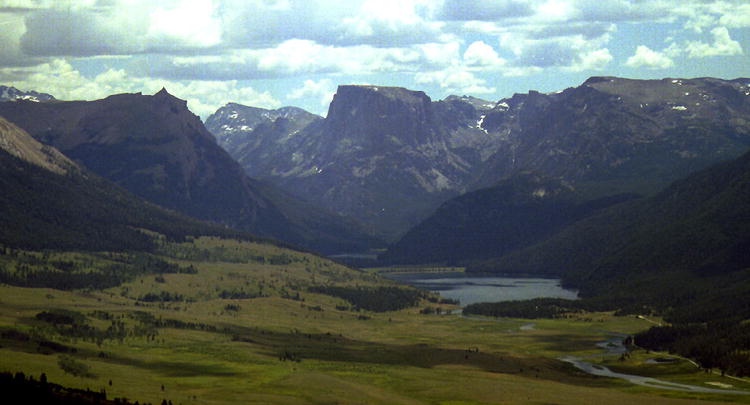
Wyoming Upper Green River ValleyPhotograph - Pinedaleonline.com

The current administration would encourage escalated gas drilling in the Upper Green River Valley in Wyoming.

Plan: TRIPLE the number of gas wells, which would
generate huge profits for gas companies at the expense of the American taxpayer, local communities and wildlife.

Join in asking the the current administration to pursue a sensible management plan for the Upper Green:
  • Set a slower, more reasonable pace for new gas development;
  • Cluster drilling infrastructure so it minimizes impact on the land and wildlife;
  • Strengthen seasonal drilling restrictions; and
  • Withdraw additional critical areas from any new leasing or development.
Please visit the action center of the Wilderness Society. You have until June 18 to comment. Please take action and tell your friends.